
Perhaps you've already noticed that in some instances a Pt100 is specified with an accuracy class B or A. At other times, it has the class F 0.3 or F 0.15. This blog post looks at the specifications for Pt100 in the international IEC 60751 standard and explains the …
Resistance thermometer
Measurement technology in compressors
Roland Sachs | ApplicationsThe measurement technology used in compressors is tending to increase more and more. And for good reason. The balancing act between increased compressed air demands and reduced energy consumption also depends, to a large extent, on the intelligent use of measuring …
Ice cold – Electrical thermometers in low ambient temperatures
Joachim Brückner | Know-howMedium temperatures of -60 °C don't even make the designers of electrical thermometers shrug their shoulders – but when one speaks of ambient temperatures of -60 °C, then one often hears a sharp intake of (cold) breath. It quickly becomes clear that one cannot …
Mineral-insulated cables – a core component for the construction of electrical thermometers
Jochen Gries | Know-howMineral-insulated cable, often also abbreviated to MI cable, consists of a metal sheath and ceramic-insulated internal conductors. The ceramic is a metal oxide powder (standard material is MgO) with a purity of > 99.0%, which ensures the insulation of the internal …
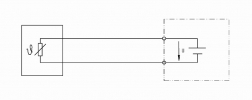
Pt100 in 2-, 3- or 4-wire connection?
Roland Sachs | Know-howPt100, Pt1000 and NTC are the most-used measuring elements in resistance thermometers . I would like to use this blog to consider the question of connection types in greater detail. Resistance thermometers change their electrical resistance as a function of …