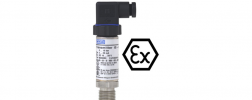

In Europe plants or machines used in hazardous areas must comply with the ATEX directive 94/9/EC. Therefore, the pressure sensors or other measuring instruments approved according to ATEX must be used only in conjunction with ATEX approved isolated barriers if they use …
Know-how
Pressure sensors, transmitters and safety: SIL, PL, DIN EN ISO 13849 and IEC 61508 – Commonly used terms and abbreviations
Stefan Heusel | Know-howWhen using pressure sensors and pressure transmitters, our customers often ask for explanations of frequently used terms and abbreviations in connection with "SIL applications". SIL – which means Safety Integrity Level, and PL, which means Performance Level, are …
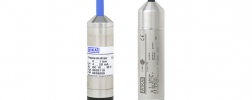
The design of a submersible pressure transmitter / level probe – Part 2
Enrico Bossart | Know-howIn my last article, the design of a submersible pressure transmitter / level probe - Part 1, I was explaining the design of a submersible pressure transmitter, beginning with the measuring cell and its electronics. Specifically with respect to the media resistance …
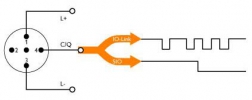
Overview: How does the IO-Link work?
Jürgen Reiser | Know-howHow does the IO-Link communication interface of WIKA's pressure switch PSD-30 actually work? IO-Link is a point-to-point connection (i.e. not a new field bus) between sensor/actuator and a field bus master such as a PLC. The supply of the field device (pin 1 and …
Ex pressure sensors and transmitters for ATEX Zone 0, Zone 1 or Zone 2 – markings of pressure instruments for use in a hazardous area
Stefan Heusel | Know-howThe field of application or the suitability of a pressure sensor for a hazardous area is designated by the marking on the device. As a matter of principle, intrinsically safe pressure sensors marked Ex ia can be used in zone 0 (the "most dangerous" area), whereby …