In practice, RoHS-compliant is often equated with "lead-free". However, this is a widespread mistake. The RoHS directive 2002/95/EC aims to minimize the use of hazardous substances (including, among others, lead), but it does not completely exclude a small percentage. …
Pressure
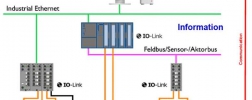
Overview: Is IO-Link the new communication standard?
Jürgen ReiserIn connection with the electronic pressure switch PSD-30, I often get asked what is IO-Link and how it is defined. IO-Link is a new communication interface in the area of factory automation/ machine building. Leading providers of automation technology have joined …
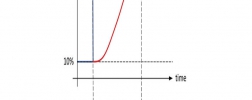
The response time behaviour of pressure sensors: How is the response time defined and what is the definition of the rise time?
Enrico BossartThe response time of pressure sensors is reflected in a large number of varying parameters, such as the response time, settling time or rise time in specifications or data sheets. In general, it can be assumed that the response time is defined as the interval required …
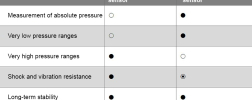
Pressure sensor principles – a comparison
Sabine MaiThere is no “ideal” sensor principle. Of particularly great importance and widespread use are resistive sensor technologies, due to their reliability. For electronic pressure sensors, WIKA is using metal thin-film and piezo-resistive sensors. Each of the two …
Difference of 4-20 mA in 2-wire and 3-wire technology in pressure sensors
Michèle BeyerWhat exactly is the difference between the 4-20 mA output signal in 2- and 3-wire technology? This question is answered best from the viewpoint of the user: An output signal in 2-wire technology means: less wiring required better EMC protection, since …