
Whether in winter at -10 °C, in the height of summer or under changing system pressures – the GA11 analytic instrument from WIKA achieves stable and reproducible measuring result regardless of the test environment. This is made possible by an intelligent combination of temperature compensation, real-gas correction and digital sensor architecture.
High- and medium-voltage switchgear are not laboratories, but operating facilities with real ambient conditions. Temperature differences influence the sensor properties of all relevant measurement parameters, from purity and humidity to decomposition products. Without compensation, deviations occur that can lead to misinterpretations and unnecessary SF6 handling. The GA11 analytic instrument addresses precisely this challenge and ensures that measurements remain reliable, also under real-world conditions.
Sensor architecture with wide calibration range
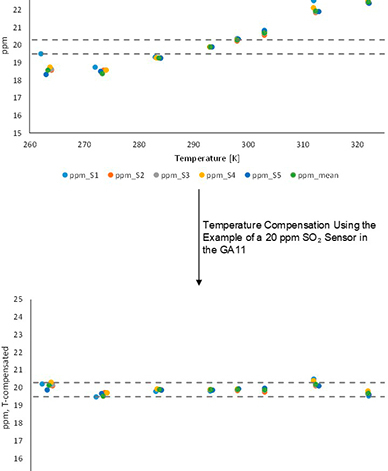
Figure 1: Comparison of the measured values of 19.9 ppm SO2 before temperature compensation (top) and after (bottom).
The GA11 is calibrated over a temperature range from -10 °C to +50 °C. This ensures that the measurement accuracy of the sensors remains reliable and stable even outside ideal laboratory conditions. The electrochemical sensors for SO2, HF, H2S and CO feature continuous temperature compensation to balance the temperature-related influences on the measuring signal in a targeted manner.
Figure 1 shows an example of the effect of this temperature compensation using a 20 ppm SO2 sensor in the instrument. Since the response speed of electrochemical sensor elements increases with rising temperature, without correction the measuring signal would also increase depending on the temperature. The integrated compensation ensures that this effect is precisely balanced out.
The acoustic sensor used to determine the purity of SF6 mixtures is also temperature-dependent. It measures the speed of sound and therefore depends on the density of the measuring gas, which also changes with temperature. This sensor is therefore also compensated across the entire operating range of the GA11. Each sensor is provided with an individual calibration table to ensure maximum precision.
Temperature correction takes place in real time and specifically compensates for temperature-dependent effects within the sensor elements – delivering reliable measuring results under all operating conditions.
Precise humidity measurement through real-gas correction
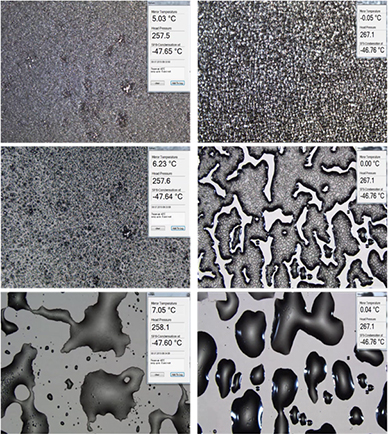
Figure 2: Melting points of ice in SF6 (left) and air (right) compared.
Both pressure and temperature are decisive factors for precise humidity measurement. The GA11 therefore measures humidity directly under system pressure, taking into account the real physical behaviour of the respective gas.
Figure 2 compares the melting points of a layer of ice in SF6 and in air. While the melting point in air is 0.01 °C, in SF6 it shifts to a range between 5 and 7 °C due to the formation of hydrates. The figure features microscope images of a mirror surface that show – from top to bottom – the ice layer, the beginning of the melting process and the complete melt.
A key unique selling point of the GA11 is its multiple calibration for N2 (air), SF6 and CO2. The reason for this is that the frost and dew point behaviour in these gases differs significantly. In collaboration with an external partner, WIKA has examined these effects in detail – and they are stored as correction values directly in the sensor.
The combination of a capacitive humidity sensor and correction of real gas behaviour in the presence of water thus prevents systematic deviations. These could otherwise occur during measurements at atmospheric pressure or based on idealised models. Furthermore, this measurement concept also enables reliable humidity measurement in alternative insulating gases. Here, classic dew point mirrors are no longer suitable due to condensation of individual components.
The GA11 thus delivers precise measuring results that realistically and reproducibly reflect the actual conditions in the gas compartment.
Stable measured values in the field
Temperature compensation works in conjunction with the digital sensor architecture. The automated measurement process further reduces fluctuations, as the software automatically detects when the acquired measured values are sufficiently stable during measurement. This provides users with reliable results without having to repeat the measurement.
Reliable basis for operation, diagnostics and documentation
Whether for routine maintenance, commissioning or fault diagnosis – consistent measured values facilitate technical decisions and reduce the risk of unnecessary measures. Operators benefit from fewer misinterpretations, clear display of limit values and comprehensive documentation. This ensures that the limit values are checked precisely, as required by standards such as IEC 60376 and 60480.
Conclusion
The GA11 demonstrates how precise gas analysis works under real-world conditions. Comprehensive temperature compensation and consideration of real gas behaviour are key components for reproducible measuring results, regardless of weather, ambient temperature or operating state of the system.
Note
Further product information can be found on the WIKA website. You can view the GA11 product passport with technical documents, data sheet and certificates here. If you have any questions, your contact will gladly help you.
Also read our posts
New GA11 analytic instrument featuring smart SF6 measurement
Gas-insulated switchgear: The importance of SF6
High-accuracy moisture measurement in SF6 switchgear