
Our website uses cookies. By continuing to use it, you agree to their use.

Further information
Agree
  • Applications
  • Products
  • Know-how
  • WIKA insight
  • Contact
    • Contact form
    • WIKA world wide
    • Current authors
  • WIKA blog
    • Back
    • WIKA blog
    • WIKA blog
    • WIKA blog
    • WIKA blog
    • WIKA blog
    • WIKA blog
    • WIKA blog
    • WIKA blog
    • WIKA blog
    • WIKA blog
  • WIKA Corporate Websites
    • Back
    • WIKA Germany
    • WIKA Austria
    • WIKA Switzerland
WIKA
  • WIKA blog
    • WIKA blog
    • WIKA blog
    • WIKA blog
    • WIKA blog
    • WIKA blog
    • WIKA blog
    • WIKA blog
    • WIKA blog
    • WIKA blog
    • WIKA blog
  • WIKA-Websites
    • WIKA Germany
    • WIKA Austria
    • WIKA Switzerland
  • Applications
  • Products
  • Know-how
  • WIKA insight
  • Contact
    • Contact form
    • WIKA world wide
    • Current authors
WIKA
Products
  • WIKA blog
  • Pressure sensor
  • Facebook
  • Twitter
  • XING
  • LinkedIn
  • Send Page URL

Pressure sensor

Difference of 4-20 mA in 2-wire and 3-wire technology in pressure sensors

Michèle Beyer | Pressure

What exactly is the difference between the 4-20 mA output signal in 2- and 3-wire technology? This question is answered best from the viewpoint of the user: An output signal in 2-wire technology means: less wiring required better EMC protection, since …

Read more

Autofrettage in pressure sensors ensures zero-point stability

Eugen Gaßmann | Pressure
simulation FEM

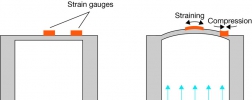
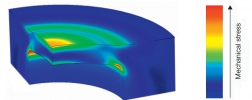
In the manufacturing operation of pressure sensors, autofrettage denotes the process of active "overload" by subjecting the pressure sensor selectively once or several times to a pressure above the nominal pressure range . This process is applied, in order to achieve …

Read more

How does a pressure sensor behave in the overload area, that means outside the measuring range?

Anna Gries | Pressure
illustration: overload

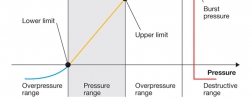
I have often been asked about the behaviour of a pressure sensor outside the specified measuring range, that means in the overload area and what will happen if the overload limit of a pressure sensor is exceeded. This fact is described as follows in the book …

Read more

What is the functional principle of a resistive pressure transmitter?

Anna Gries | Pressure
Functional principle of a resistive pressure transmitter

The functional principle of a resistive pressure transmitter is very simple. The pressure sensor converts the mechanical pressure value into a proportional electrical signal. The pressure sensor typically consists of a stable main body and a (thin) diaphragm. The …

Read more
Most-read articles
  • What is the functional principle of a resistive pressure transmitter?

  • Filling liquids in pressure gauges: Usage and advantages

  • How do diaphragm seals work?

WIKA newsletter
Find out about news and changes – both at WIKA and in your industry. To the subscription
WIKA white papers
Gain in-depth insights into current technologies, trends and solutions – of course for free. To the white papers
WIKA online shop
Order your standard instrument easily in our online shop – in the accustomed WIKA quality. To the online shop
WIKA career portal
Get to know the WIKA Group as an employer – in our career portal we introduce you to our company. To the career portal

Accuracy Calibration Chemical Diaphragm seals Electrical connection Ex protection Filling height Force measurement Functional safety (SIL) Hydrogen Hydrostatic Hydrostatic level measurement IIoT International Measuring instruments Measuring point Measuring principles Measuring range Oil & Gas Operating conditions Pharmaceuticals & Biotechnology Pressure Pressure gauge Pressure measurement device Pressure sensor Pressure switch Process connection Process safety Processtransmitter Project Renewable energy Resistance thermometer Safety Social commitment Standards/approvals/directives Submersible pressure transmitter Subsidiary Sustainability Switching function Temperature Temperature effect Thermocouple Thermometer Type of pressure Valves & Controllers


© 2026 WIKA Alexander Wiegand SE & Co. KG

  • Privacy policy
  • Legal notice