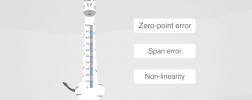

Three specific types of errors have a negative impact on pressure sensor accuracy. This easy-to-understand video from WIKA explains the difference between zero-point errors, span errors, and non-linearity. Inaccuracies in pressure instrumentation occur when the …
Products
Diaphragm Seal Overview: Basic Principle and Applications
Chi-Che Ma | Know-how, PressureA diaphragm seal makes measuring pressure safer and more reliable, even in extreme working conditions, and is ideal for protecting pressure instrumentation and process transmitters. Discover the basic principle of diaphragm seals and when to use them. Pressure …
4 Situations that Call for a Pressure Connection with a Flush Diaphragm
Robert Lukat | PressureWhat’s the difference between a pressure sensor with an internal diaphragm and one with a flush diaphragm? And which one should you choose when measuring pressure in your application? This WIKA video explains what situations call for a pressure connection with a …
Wire-Wound vs. Thin-Film Resistance Temperature Detector: Which Is Better?
Gabriel Gonzales | TemperatureMany process applications rely on either a wire-wound or thin-film resistance temperature detector (RTD) to provide efficient and safe operations. These two types of resistance thermometers have different properties, and each has its pros and cons. In reality, this is …
What to Know about Aging and Drift in Type K Thermocouples
Robert Torgerson | Know-how, TemperatureWith repeated exposure to high temperatures, a Type K thermocouple becomes less accurate. Aging is a phenomenon that results in higher-than-accurate temperature readings, while drift results in lower-than-accurate readings. While all Type K thermocouples experience …