

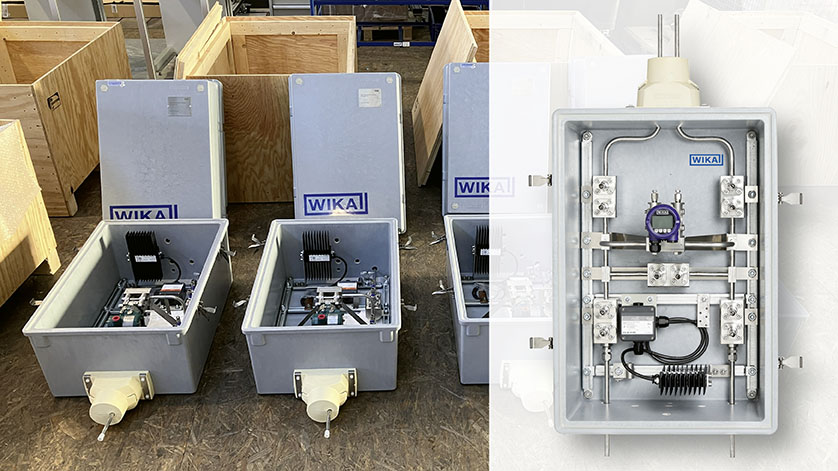
In process plants, field instrumentation is often exposed to harsh and changing ambient conditions. Pressure transmitters, pressure gauges and valve manifolds must maintain accurate measurement performance despite rain, frost, heat, UV radiation or corrosive atmospheres. Dedicated instrument enclosures help safeguard critical measuring locations under these demanding field conditions.
Instrument enclosures do more than shield installed equipment. When properly engineered, they help maintain signal reliability under changing ambient conditions, support safe operation and contribute to long-term plant availability – even in demanding applications such as high-pressure steam systems in steam cracker units and fertiliser plants.
Why instrument enclosures matter
Field-mounted instruments are exposed to a wide range of environmental stress factors. Temperature fluctuations can lead to condensation or freezing and consequently bursting of water lines in winter conditions, while aggressive environments can accelerate material ageing. In addition, mechanical impact or unintended access can compromise measurement integrity. Well‑designed instrument enclosures address several of these challenges simultaneously:
- Weather protection against rain, frost, condensation, dust, sand and UV radiation
- Resistance against harsh or corrosive ambient atmospheres
- More stable measuring conditions for improved signal quality
- Reduced installation-related risks through robust, lockable enclosure designs
By protecting the measuring location as an engineered assembly, instrument enclosures help improve data quality and support long-term plant availability.
Designed around the application
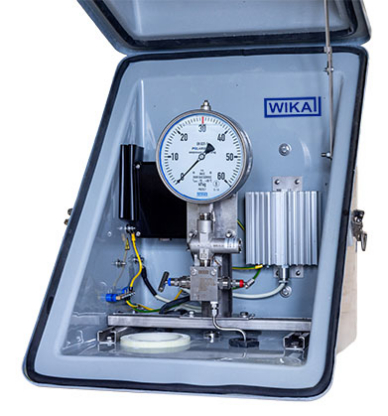
Instrument enclosures used in the process industry are designed to suit the specific measuring task and environment.
In process industries, instrument enclosures are rarely “one‑size‑fits‑all” solutions. Instead, they are configured according to the specific measuring task and installation environment. Typical designs include:
- Enclosures for absolute, gauge or differential pressure measuring instruments
- Versions for single instruments or multiple instruments within one enclosure
- Variants with closed lids, hinged doors, removable covers or viewing windows to allow reading of displays or indicators
This flexibility allows operators and planners to balance protection, accessibility and maintenance efficiency – especially in plants with high availability and safety requirements.
From engineering principle to industrial reality
The practical value of instrument enclosures becomes most evident in large‑scale industrial projects with extreme ambient conditions. In a recent world‑scale ethylene plant project operated by a leading chemical producer, high requirements were placed on pressure and differential-pressure flow measurement in the steam cracking section.
Pressure instrumentation was required to monitor super‑heated steam lines with process temperatures above 400 °C and high operating pressures. Standard field installations are insufficient to meet these requirements.
Application challenges
The enclosure solution had to address several critical challenges:
- Reliable pressure and flow measurement in super‑heated steam systems
- Potential high thermal loads during abnormal operation
- Strict safety requirements mandating fully welded solutions, excluding compression fittings
- A plant layout that also supports safe operation during winter conditions and shutdowns
Implemented enclosure concept
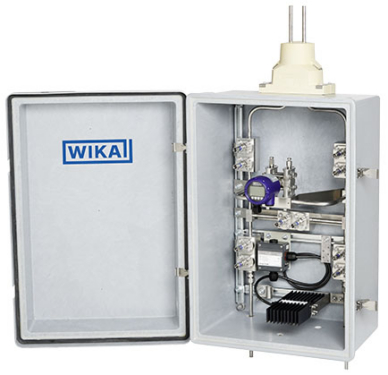
Pressure transmitter with fully welded high-pressure enclosure.
For this application, WIKA designed and supplied several dozen high-pressure instrument enclosures for gauge and differential pressure measurement. Each enclosure concept was configured as a complete, application-specific assembly comprising the following functional areas:
- Instrumentation: gauge and differential pressure transmitters installed inside the enclosure
- Process interface: customised WIKA valve manifold solutions in double-block design with butt-weld process connections for shut-off, pressure equalisation and drain functions
- Mechanical design: a consistently applied fully welded enclosure concept
- Winterisation: enclosure systems with integrated electric trace heating and thermal insulation
- Quality assurance: in-process quality control, 100 % dye penetrant test and hydrostatic pressure test to meet the project’s safety requirements
WIKA delivered the solution as a pre-assembled unit, ensuring consistent quality across all measuring locations of the field instrumentation and reducing on-site installation effort.
Instrument enclosures as part of winterisation concepts
Although the primary drivers in this application were safety and extreme process conditions, the solution also illustrates an important winterisation principle: controlling the local environment of the whole instrument instead of only heat tracing and insulation on the valves and pipelines. In cold or variable climates, winterisation concepts typically combine:
- Insulation of instruments and impulse lines
- Steam or electric trace heating
- Diaphragm seals with selected fill fluids
- Purging water from lines using compressed air
- Heated housings or instrument enclosures
WIKA: Integrated instrumentation solutions from a single source
Instrument enclosures form a critical interface between field instrumentation and demanding process environments. As engineered assemblies, they safeguard critical measuring locations, reduce installation-related risks and help maintain reliable measurement performance under real plant conditions.
In project execution, WIKA demonstrates its strength as a solution provider by combining in‑house instrumentation expertise with engineered enclosure solutions. This flexible approach – integrating WIKA products with a strong partner network in the process industry – ensures reliable, application‑specific solutions tailored to project requirements.
Note
The WIKA website offers further information on measurement solutions for the chemical industry, oil and gas industry and pharmaceutical industry, among many others. It also provides insights into WIKA as a company.
Also read our posts
Vibration protection: Case filling vs. dampened movement
Difference between gauge pressure and absolute pressure measurement
Permanently tight: Pressure gauges with fully welded connection flange