

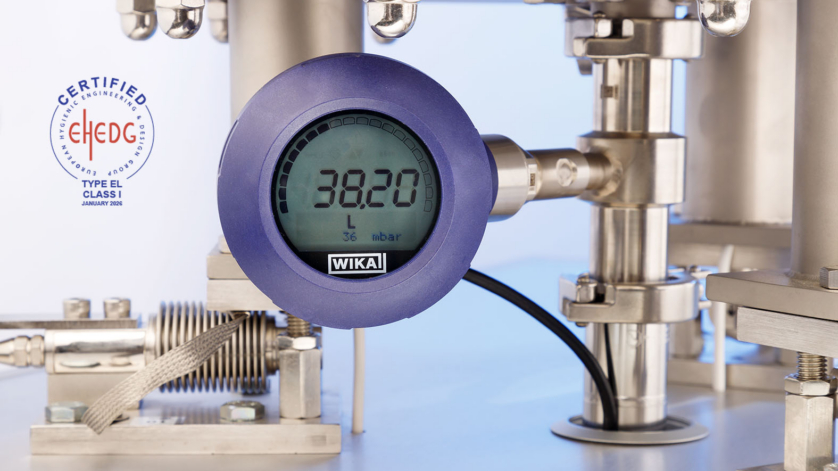
Hygienic design is a decisive factor in ensuring food safety, product quality and efficient cleaning in modern production plants. The EHEDG (European Hygienic Engineering & Design Group) takes a particularly practical and risk-based approach in this regard. Having its roots in Europe, EHEDG now operates globally, has members on every continent and is regarded worldwide as a recognised reference for hygienic design engineering. It connects food producers, plant manufacturers, research institutions and authorities with the aim of promoting hygienic engineering and design along the entire value chain.
What sets EHEDG apart
The EHEDG guidelines are a central element of the consortium’s work. Over the past decades, more than 50 documents have been developed for food processing buildings, production environments and various types of processing equipment. Guideline 8 “Hygienic Design Principles” is particularly important. It describes basic hygienic design principles for a risk-based approach to preventing product contamination. The guideline emphasises that poorly designed plants and installations are difficult or impossible to clean effectively and can therefore increase the risk of microbiological growth and cross-contamination.
EHEDG certification combines a design evaluation with – depending on the type of instrument – practical tests. Every piece of equipment intended for certification is assessed by an EHEDG Authorised Evaluation Officer. During the process, a sample instrument is examined based on the manufacturer’s drawings and the relevant EHEDG guidelines. The evaluated features include, for example, surface roughness, internal radii and design-related details. For closed, liquid-cleaned plants, in many cases an additional cleaning-in-place test in accordance with EHEDG Doc. 2 is required. A Certificate of Compliance can only be issued once the evaluation has been completed successfully and, where applicable, the cleanability tests have been passed.
The benefit of the EHEDG approach is that it not only considers individual design criteria, but also the hygienic function in the application context. Design-related deviations may be acceptable under certain circumstances if they are technically unavoidable and the hygienic suitability is demonstrated by evaluation and testing. This makes EHEDG particularly relevant for plants and components where actual cleanability and hygienic performance during operation are paramount.
EHEDG-certified measurement technology from WIKA
For food manufacturers, plant operators and quality managers, WIKA supports the EHEDG approach with hygienically designed measurement technology for pressure, temperature, level, force, flow and calibration. The instruments are designed to integrate measuring locations into the process in a way that supports cleanability, self-draining, residue-free product handling and process safety. WIKA thus helps reduce microbiological risks, safeguard product quality and document quality-critical processes in an auditable manner.
The EHEDG-certified WIKA portfolio includes more than 30 model series and variants for pressure, temperature and level measurement as well as hygienic process adaptations. The instruments mentioned include TR21-A/B/C, TR22-A/B, TR25, TW22, TW61, SA-11, IPT-21, UPT-21, PSA-31, PSD-4, PEU-21, DMSU21SA, DMSU22SA, DSSA11SA, PG43SA-S, PG43SA-D, PG43SA-C, TG58SA, TLS-H as well as numerous diaphragm seals of the 990.xx and 981.xx series.
For operators this creates a practical added value, as hygienic measuring locations can be planned, documented and standardised from a single source. Certified instrumentation supports efficient CIP and SIP processes, reduces cleaning time and downtime and helps to use water, energy and cleaning agents more efficiently. This is particularly relevant in dairies, breweries, aseptic food processes, pharma and biotech plants and wherever hygienic process safety and reproducible cleaning are crucial.
Conclusion: EHEDG combines hygienic design with proven cleanability in the process
EHEDG offers a practical, risk-based framework for hygienic design and complements the pure design evaluation with proof of cleanability. As a globally recognised network and certification system, EHEDG creates a common basis for food producers, plant engineers and component manufacturers in international markets. In combination with a broad EHEDG-certified WIKA portfolio, food producers and plant operators are provided a robust foundation to implement hygienic measuring locations in a process-safe, easy-to-clean and audit-ready manner.
FAQs
What does EHEDG mean? EHEDG (European Hygienic Engineering & Design Group) develops internationally recognised guidelines and certifications for hygienic plant design in the food and beverage industry. The organisation evaluates not only the design of components but also their practical cleanability and hygienic function. The aim is to minimise contamination risks and ensure the highest standards regarding food safety and product quality.
What is the difference between EHEDG and 3-A? EHEDG evaluates, in addition to design, the hygienic function and cleanability of components, whereas 3-A mainly checks defined design and manufacturing requirements.
What benefits does EHEDG offer food manufacturers? EHEDG helps food manufacturers to reduce hygienic risks, optimise cleaning processes and improve the auditability of production plants.
Why is hygienic design important? Hygienic design helps to avoid product contamination, increase product safety and reduce cleaning effort and downtime. This also supports sustainability for the food producer.
Can instrumentation be EHEDG-certified? Yes, measuring instruments can be certified. WIKA offers more than 30 model series and variants for pressure, temperature and level measurement.
For which industries is EHEDG relevant? EHEDG is particularly relevant for the food and beverage industry.
Note
Would you like to find out more about hygienic measurement technology? Then visit our website. Further information can also be found in our “Sanitary applications” brochure. If you have any specific questions or concerns, your WIKA contact will gladly help you.
Also read our posts
Diaphragm seal system with IO-Link, for the food industry
Pressure switch for safe operation of food silos
New Food: Biomass fermentation harbours complex measuring requirements